
How to Become an Automotive Title Clerk With No Experience: Complete Guide
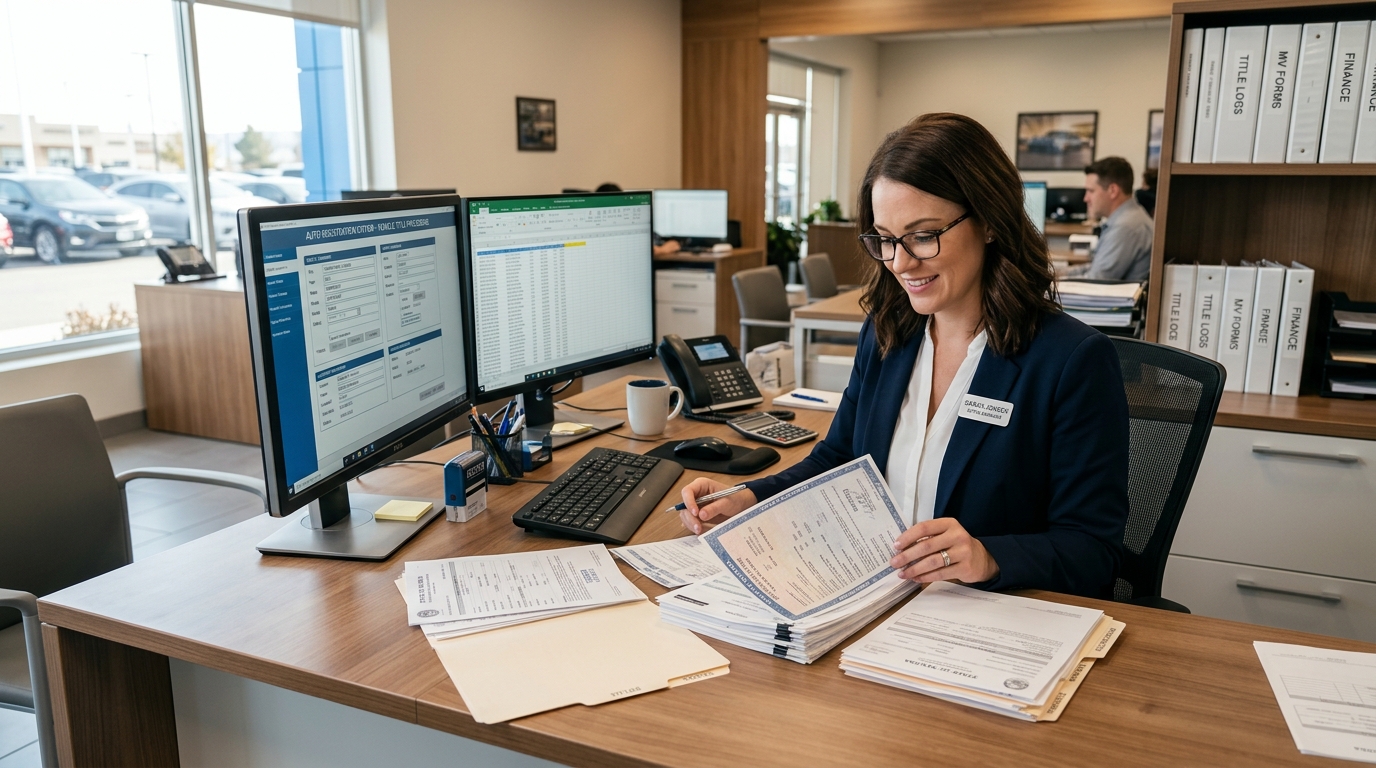
Short answer: You can become an automotive title clerk with no experience by leveraging a high school diploma, basic computer literacy, and starting in entry-level dealership accounting roles such as lot attendant, service cashier, or title clerk trainee. Title clerks earn between $14.00 and $25.00 per hour ($30,000 to $45,000 annually), preparing legal documents, verifying lien payoffs, and processing Department of Motor Vehicles (DMV) paperwork through software like Reynolds & Reynolds, CDK Global, and state Web Dealer portals.
Automotive title clerk career at a glance
- Education requirement: High school diploma or GED; post-secondary degree is rarely required.
- Compensation: $14.00 – $25.00 per hour ($30,000 – $45,000/yr), depending on dealership volume and region.
- Core software: Reynolds & Reynolds, CDK Global, Dealertrack, and state-specific DMV electronic titling portals.
- Key responsibility: Processing vehicle titles, registering tags, clearing bank liens, and verifying sales tax compliance.
- Best entry path: Service department cashier, dealership receptionist, or clerical administrative assistant.
Updated September 2026. Wage benchmarks reflect national dealership accounting averages and Bureau of Labor Statistics clerical data.
What does an automotive title clerk do?
An automotive title clerk handles the critical administrative and legal bridge between an auto dealership, vehicle purchasers, financial institutions, and state motor vehicle agencies. Whenever an automobile is bought, sold, leased, or traded in, legal ownership must transfer cleanly without statutory penalties or encumbrances.
Title clerks verify that titles are free of liens, calculate state and municipal sales tax, verify Manufacturer Certificates of Origin (MCO), submit registration packets to the Department of Motor Vehicles (DMV), and maintain the dealership’s title inventory ledger. In high-volume dealerships, this clerical workflow keeps revenue flowing smoothly between sales desks, finance and insurance (F&I) managers, and accounting departments.
Unlike generic administrative roles, title work involves state-mandated regulatory deadlines. In most jurisdictions, dealerships have between 20 and 30 days from the date of sale to perfect titles with the DMV. Failing to meet these deadlines triggers dealer fines and customer complaints, making meticulous, deadline-driven clerks indispensable assets to dealership general managers.
Automotive title clerk pay rates and salary expectations
Starting compensation for entry-level automotive title clerks generally falls between $14.00 and $18.00 per hour, with experienced title administrators, tag agency specialists, and automotive controllers earning $22.00 to $28.00 per hour or more. Geographic market dynamics, dealership sales volume, and whether the employer is an independent lot, franchise store, or auto auction significantly impact hourly earnings.
Because dealership operations rely heavily on transaction velocity, many title departments offer performance bonuses tied to error-free processing quotas or prompt month-end accounting reconciliations.
| Experience Level | Hourly Wage Range | Estimated Annual Pay | Core Responsibilities |
|---|---|---|---|
| Title Clerk Trainee / Entry-Level | $14.00 – $18.00 / hr | $29,000 – $37,500 / yr | Filing documents, scanning deal jackets, mailing DMV packets, customer phone follow-ups |
| Intermediate Title Clerk (1–3 Years) | $18.00 – $22.00 / hr | $37,500 – $45,800 / yr | Out-of-state titling, lien payoff verification, tax reconciliation, dealer trade documentation |
| Senior / Lead Title Administrator | $22.00 – $28.00+ / hr | $45,800 – $58,000+ / yr | Title audit resolution, training junior clerks, managing state DMV audits, dealer group oversight |
Dealership software tools you need to know
Job seekers do not need prior mastery of proprietary dealership software before applying, but demonstrating familiar awareness of Dealer Management Systems (DMS) on your resume signals immediate training readiness. Most dealerships run on one of three foundational platforms:
Reynolds & Reynolds (ERA-IGNITE): The dominant DMS across large automotive dealership networks. Title clerks use Reynolds to pull deal information, verify F&I funding status, and print state title forms.
CDK Global (formerly ADP Dealer Services): A widely utilized enterprise automotive software suite covering accounting, parts, sales, and motor vehicle document generation.
Dealertrack / Cox Automotive & State Web Portals: Cloud-based solutions specifically dedicated to electronic titling, lien perfection, tag issuance, and Department of Motor Vehicles electronic filing (e-titling).
How to land your first title clerk job with no experience
Dealerships regularly face clerical turnover and frequently look to train reliable candidates who possess fundamental organizational instincts. If you have no formal automotive titling background, follow these three proven entry pathways:
1. Start as a Dealership Cashier or Receptionist: Automotive service cashiers and front-desk receptionists sit directly adjacent to accounting. By handling customer repair payments, verifying invoices, and assisting accounting staff during slow hours, you can learn basic deal jacket structures and transition internally within three to six months.
2. Apply to Automotive Auction Companies: High-volume vehicle auctions (such as Manheim, Copart, or ADESA) process thousands of wholesale vehicle transfers weekly. Auction title departments frequently hire entry-level data entry processors and title runners without requiring prior retail dealership tenure.
3. Target Private Tag & Title Agencies: In many states (such as Florida, Pennsylvania, and Maryland), private tag and title agencies handle third-party motor vehicle transactions. These offices hire customer service clerks to handle tag renewals and title transfers, providing exceptional hands-on licensing training.
Transferable skills that make your resume stand out
When transitioning from retail, food service, or hospitality into dealership clerical work, frame your daily past duties as administrative and compliance competencies. Dealership office managers search for candidates who demonstrate high precision, numeric literacy, and reliable document management.
If you are building your resume, explore our foundational guides on entry-level office jobs without a degree and review our retail-to-office resume guide to translate customer-facing work into corporate qualifications. Preparing with data entry assessment test drills will also ensure you breeze through pre-employment clerical screenings.
- Cash drawer & invoice balancing: Reframe frontline cash handling as ledger reconciliation and payment auditing.
- Document verification: Highlight checking customer IDs, contract signatures, or loan applications as compliance auditing.
- 10-key numeric keypad proficiency: List your keystrokes-per-hour (KPH) speed to showcase numeric data entry capability.
- Customer conflict de-escalation: Dealing with frustrated car buyers whose tags are delayed requires calm, diplomatic telephone etiquette.
Day-in-the-life: What a title clerk actually does all day
A typical day begins in the dealership accounting office reviewing deal jackets submitted by the F&I finance managers from the previous evening’s vehicle sales. The title clerk opens each physical deal jacket or digital document folder to verify that buyer signatures, odometer disclosure statements, power of attorney forms, and trade-in titles match state guidelines.
Next, the clerk accesses the state DMV electronic filing portal to register new license plates, calculate excise and registration fees, and issue temporary operating permits. If a customer traded in an existing vehicle with an outstanding loan balance, the clerk coordinates payoff checks with lending institutions to secure the clean, released physical title.
The afternoon is typically dedicated to resolving title kicks (packets rejected by the DMV due to missing signatures, clerical errors, or address discrepancies) and organizing dealer trades—situations where the dealership swaps new vehicle inventory with a competing store.
Frequently asked questions
Does an automotive title clerk require a college degree?
No. The vast majority of automotive title clerk positions require only a high school diploma or GED equivalent. Employers value attention to detail, typing speed, and reliability far more than formal university credentials.
Is the automotive title clerk role stressful?
The role can be moderately fast-paced near month-end dealership sales closes and registration statutory deadlines. However, it offers predictable weekday office hours without the physical strain of retail or service work.
What is the difference between a title clerk and a billing clerk?
A title clerk specializes in motor vehicle legal documents, lien releases, and DMV registration. A billing clerk in an auto dealership focuses on posting vehicle sales into accounting ledgers, calculating sales commissions, and reconciling wholesale invoices.
How long does it take to learn automotive titling?
Most entry-level clerks become comfortable with standard in-state retail titles within four to six weeks. Handling complex out-of-state titling, commercial fleet registrations, and probate vehicle sales generally takes three to six months of on-the-job mentorship.
Can an automotive title clerk work remotely?
While some centralized national dealer groups and private title processing vendors offer hybrid or remote data entry roles, most retail dealership title clerk positions are on-site because they require handling physical vehicle titles, customer checks, and state license plates.
Primary sources and editorial method
- U.S. Bureau of Labor Statistics: Financial Clerks
- National Automobile Dealers Association (NADA) Workforce Study
- Texas Department of Motor Vehicles: Dealer Titling Resources
The Office Job provides independent occupational research. Wage data and state title regulations vary across jurisdictions; consult regional dealer associations and local licensing bureaus for current local requirements.